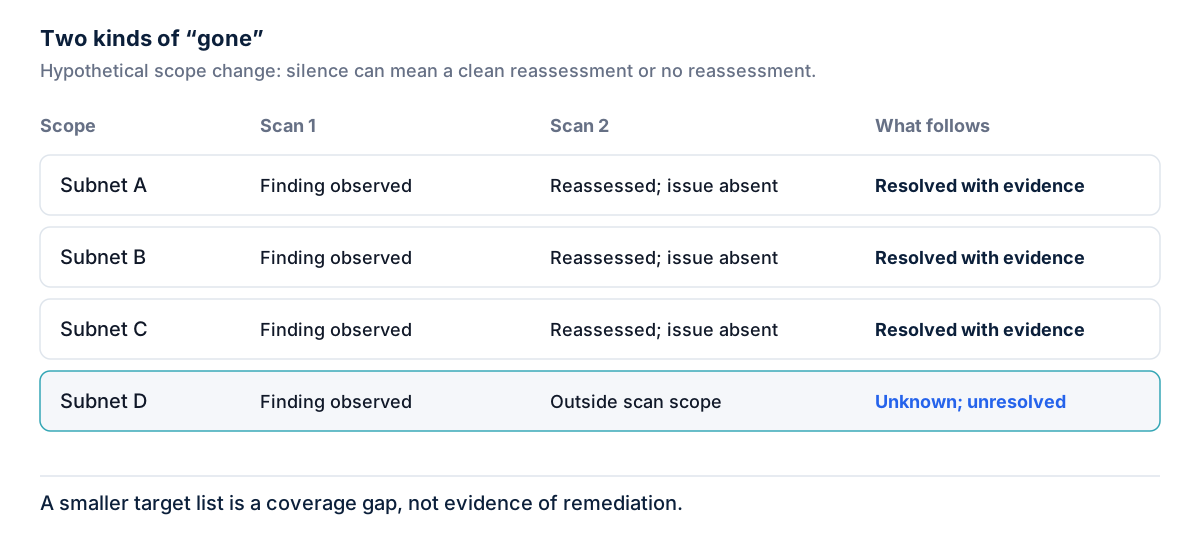
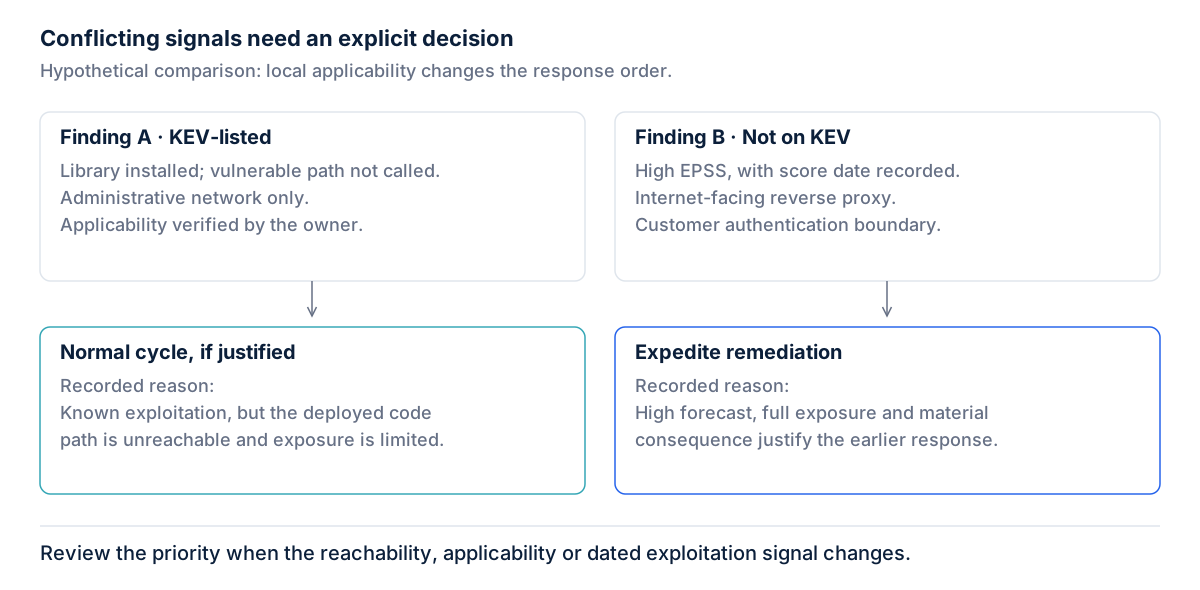
Suppose a scan reports a critical authentication bypass in the web management interface of a storage appliance. The vendor’s advisory confirms the issue and says a firmware fix is “planned.” The appliance holds backups for a production database and cannot be replaced this quarter. The finding is real, the patch does not exist, and the ticket cannot stay open with no answer.
Patching is not always immediately viable. NIST SP 800-40 Rev. 4, Section 2.1, lists why patching is sometimes not viable, including that “A patch may not be available yet.” The question is what you do instead, and how you prove it.
A control is not the same as acceptance
The two blur because both leave the vulnerability in place. SP 800-40 Rev. 4 separates them. To accept is to “Accept the risk from vulnerable software as is, such as by relying on existing security controls to prevent vulnerability exploitation or by determining that the potential impact is low enough that no additional action is needed.” To mitigate includes “deploying additional security controls to reduce vulnerability exploitation (e.g., using firewalls and network segmentation to isolate vulnerable assets, thus reducing the attack surface).”
A compensating control is a mitigation: it changes the environment so the vulnerability is harder to exploit. Whatever risk remains is a separate decision for an authorized approver. Acceptance alone changes nothing. Writing “compensating control: existing firewall” on a finding when nothing was added or verified is acceptance wearing a different label. NIST SP 800-53 Rev. 5 defines compensating controls as controls employed “in lieu of” baseline controls that “provide equivalent or comparable protection.” If you cannot say what protection the control stands in for, you have not chosen one yet.
Choose the control from the attack path
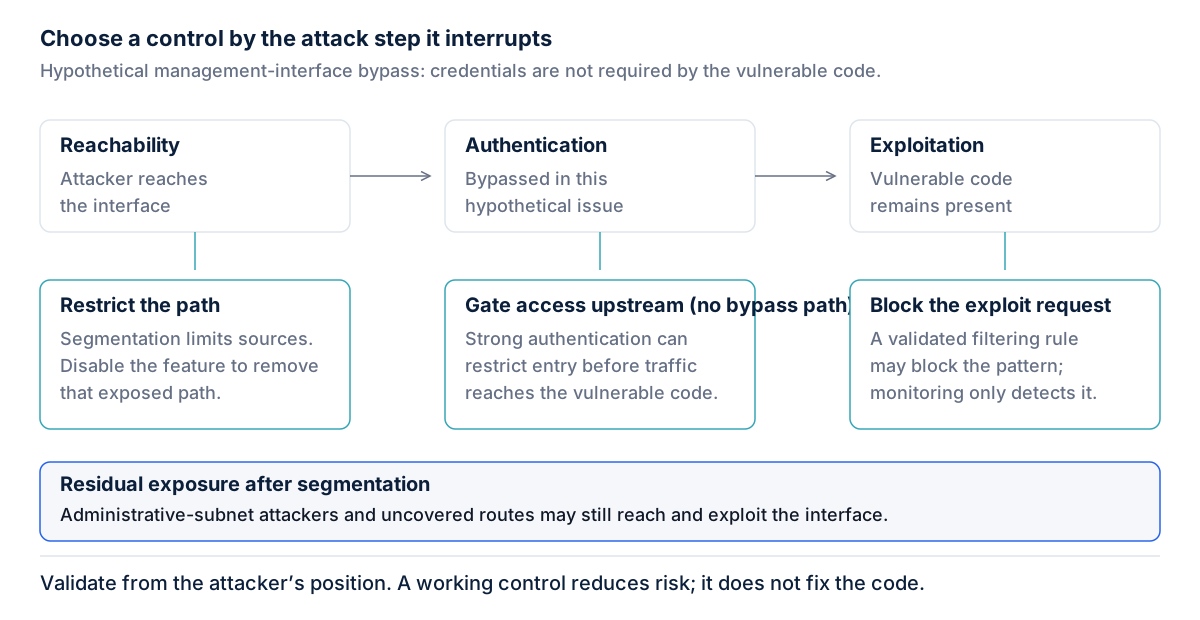
Start from the vulnerability’s preconditions. Every exploit needs some combination of a way to reach the vulnerable code, a level of authentication, and sometimes an action by a user. Write down which of these the finding requires, then pick the control that removes one.
For the appliance, the bypass requires network reachability to the management interface and nothing else: no credentials, no user interaction. That points at controls that break reachability first.
Candidate controls address different parts of the attack path: disable the vulnerable feature (if administrators can use the CLI, turn the web interface off); restrict reachability with segmentation or an ACL to a small administrative subnet; put a WAF or virtual patching rule in front that blocks the request pattern; require stronger authentication upstream, such as a jump host with multi-factor authentication; harden the host so a successful exploit gains less; and monitor and alert on access. Their effectiveness depends on the deployment; upstream authentication or filtering helps only if relevant traffic cannot bypass it. Monitoring does not break the path; it shortens time to discovery, which matters only if someone acts on the alert.
Then state the residual exposure plainly. With the interface restricted to an administrative subnet, the vulnerability is still exploitable by anyone on that subnet, anyone who compromises a workstation on it, and anyone who reaches the appliance through a route the ACL does not cover. That residual is what the approver is asked to accept.
Validate it from the attacker’s side
SP 800-40 Rev. 4, Section 2.2, includes verification in the risk response: “For deploying additional security controls, ensure they are functioning as intended.” Re-test from the position the attack path assumed. From a host outside the administrative subnet, attempt to reach the management interface. The expected result is no connection, not a login page. Then test from inside the subnet to confirm legitimate administration still works, because a control that breaks operations gets removed a week later.
Confirm the rule is in the right place. An ACL on a switch the traffic never traverses looks correct and does nothing. Read the effective configuration where the traffic flows, not the ticket that requested it. Record whether the test was blocked as intended and corroborate it with available enforcement logs and configuration evidence; scanner labels vary with the response and test method. The rescan from the external vantage point, the dated test output and the configuration excerpt are the evidence. Repeat the validation after any change that touches the path.
Document it as a decision
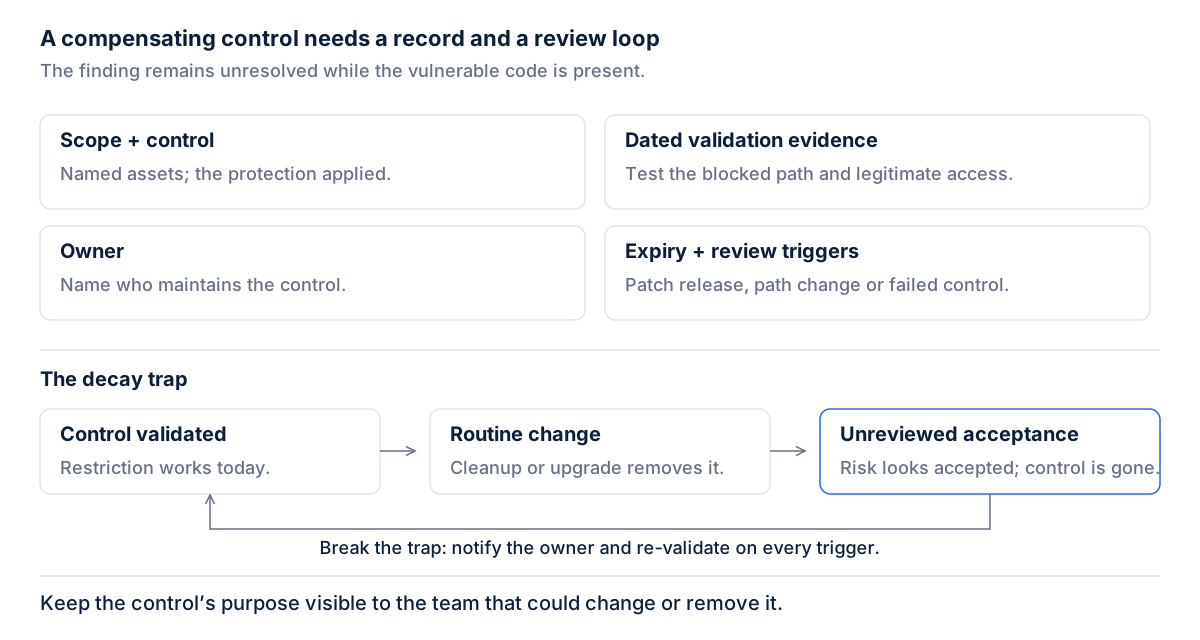
The control is only as durable as its record. A workable record has six parts: the scope (which assets, by identifier, not “the storage appliances”); the control, described concretely enough that someone else could check it; dated evidence of validation; a named owner for the control, often not the owner of the finding; an expiry or review date; and the review triggers. A rescan should not erase a risk decision covers what an acceptance record needs; a control adds the obligation to show it still holds.
Review triggers for the appliance are specific: the vendor releases the fix; the appliance is moved, re-addressed or placed behind a different gateway; a scan observes the interface from outside the subnet; the ACL or its parent object changes; the appliance is upgraded for any reason. Each is something a change-review checklist can act on.
How the finding should look afterward
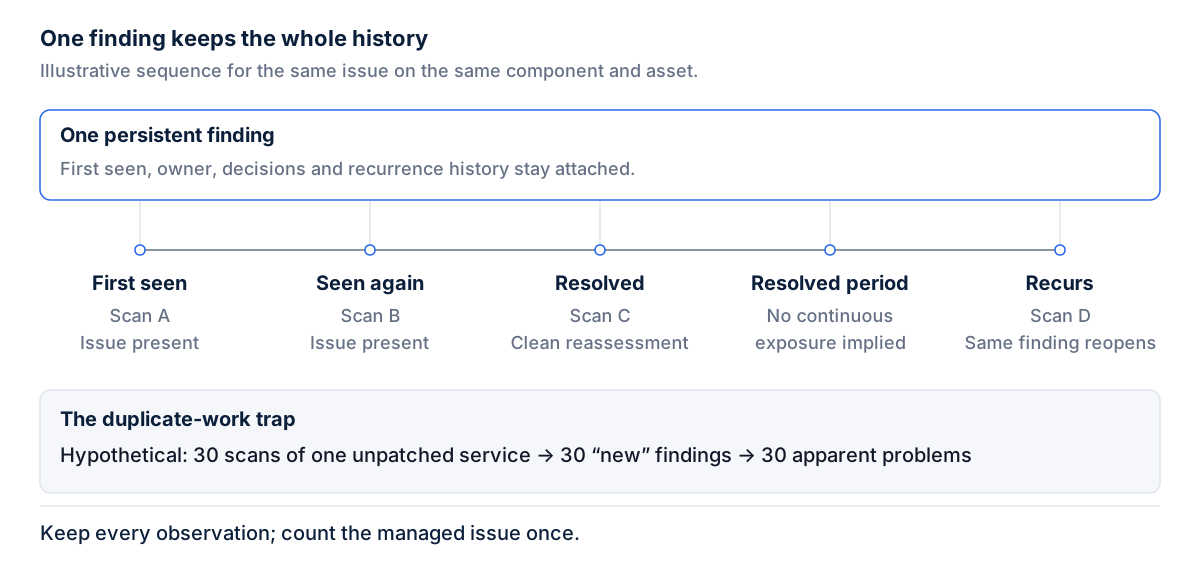
The finding is not resolved. The vulnerable code is still running and an assessment with suitable access and checks may still detect it. Showing it as fixed hides the asset from the list that matters when the patch ships. Keep the finding unresolved with an active mitigation; record risk acceptance separately when an authorized approver accepts the residual risk. Counts of unresolved findings should include it.
Controls decay
SP 800-40 Rev. 4, Section 2.2, names the failure directly: “Continuously monitor the risk response. Make sure that the risk response continues to be in place: no one uninstalls the patch, deactivates the additional security controls, lets the cybersecurity insurance lapse, or restarts the decommissioned asset.” Section 3.5.4 adds that organizations “should plan on periodically reevaluating their alternatives to patching.”
The ways a control disappears are mundane. A firewall cleanup removes rules with no documented purpose, and the ACL had none the network team could see. A firmware upgrade re-enables the web interface by default. A new administrative VLAN is created and the ACL’s source range no longer matches where administrators sit. Nobody attacks the control; it erodes. The defense is making the control’s record visible to the team that could remove it, and to re-validate on every trigger, not only when the review date arrives.
In practice
- Pick one finding with a compensating control. Can you state which precondition of the attack path it removes and what residual exposure remains?
- Does the dated evidence show a test from the attacker’s vantage point, or only a configuration screenshot?
- Would a firewall cleanup see why the rule exists?
- Is the finding shown as unresolved with an active control, or marked fixed?
- Would a vendor patch release or a network change actually reach the control’s owner?
Sectie’s Exposure & Vulnerability Management product keeps a risk acceptance next to the finding, with its reason, approver and expiry, and a scan never silently overrides it.